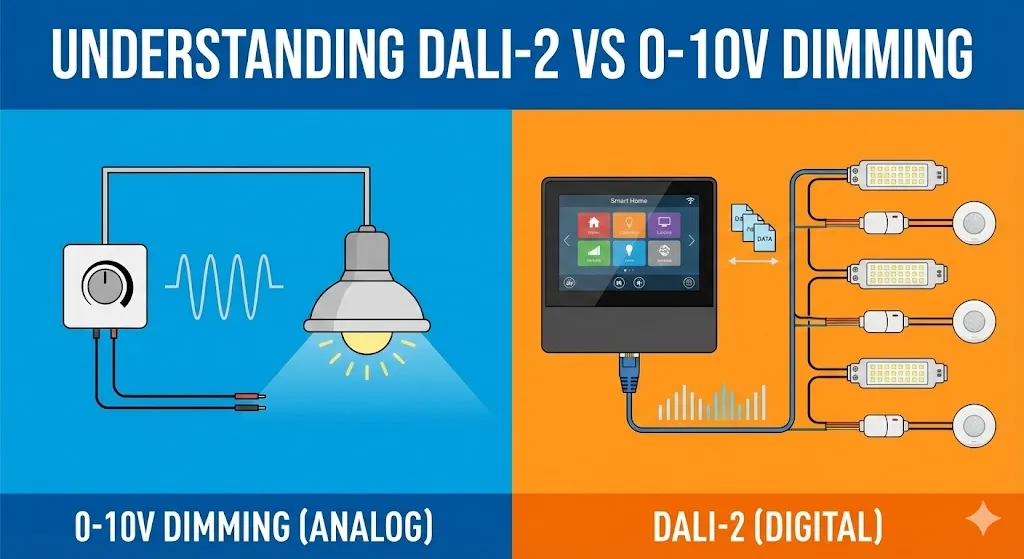
"The driver is the heart of the LED. Choosing the wrong dimming protocol is the #1 cause of flickering, buzzing, and project failures. Here is the engineering breakdown."
0-10V: The Analog Standard
How it works: A simple DC voltage signal. 10V = 100% brightness, 1V = 10%. Below 1V, it cuts off (or should).
Pros: Cheap, universal, simple wiring.
Cons:
- Voltage Drop: Long wire runs cause signal loss (e.g., lights at the end of the hall are dimmer).
- Grouping: Hard-wired zones. To change a zone, you have to rewire the circuit.
- The 10% Problem: Many cheap 0-10V drivers can't dim below 10%, or they flicker at low levels.
DALI-2: The Digital Future
Digital Addressable Lighting Interface (DALI) is a two-way communication protocol.
Why Engineers Love It:
- Addressable: Each light has an IP/Process ID. You can regroup lights via software without touching a wire.
- Feedback: The driver reports status. If a light fails, the system knows instantly.
- Wiring: Polarity free. You can't wire it backwards.
Verdict
For a small office or warehouse? 0-10V is fine.
For a smart building, hotel, or high-end home? DALI-2 is mandatory for the flexibility and 0.1% smooth dimming.
Commercial Pathways
Turn research content into sourcing or product action
#DALI#Dimming#Smart Home
Share this: