Choosing between OEM and ODM manufacturing defines your control over design, IP, and tooling in commercial LED lighting. Understanding these models, securing mold ownership, and enforcing strict quality workflows are essential for brand owners and importers. Compare technical capabilities and legal protections, not just unit costs, before committing to a supplier.

What is the difference between OEM and ODM in LED lighting?
OEM (Original Equipment Manufacturer) means you supply the design, drawings, and performance specifications, and the factory builds to your brief. ODM (Original Design Manufacturer) means the factory already holds a proven design; you select it, brand it, and sell it under your label. A related path is OBM (Original Brand Manufacturer), and private label led lighting sits close to ODM when you focus on branding and distribution while the factory handles both design and manufacturing. For industry acronyms and related terms, see the LED terminology guide. Understanding oem vs odm lighting early keeps design ownership, tooling, and IP aligned with your brand strategy.
How do OEM and ODM models compare for B2B buyers?
For B2B buyers, oem vs odm lighting is less about unit price and more about who owns design, molds, and risk. Use the conceptual comparison below when you shortlist an oem led lighting manufacturer or an odm lighting manufacturer — treat every cell as a tendency, not a fixed commercial term.
| Factor | OEM (Original Equipment) | ODM (Original Design) |
|---|---|---|
| Design Ownership | Buyer provides design & specs | Manufacturer provides existing design |
| Tooling & Mold Ownership | Buyer typically owns custom molds | Manufacturer owns the molds |
| IP Ownership | Buyer retains full IP | Manufacturer retains design IP |
| MOQ Tendency | Higher (custom tooling required) | Lower (existing molds used) |
| Lead Time Tendency | Longer (design & tooling phases) | Shorter (catalog selection) |
| Cost Structure | Higher upfront NRE/tooling costs | Lower upfront costs, higher per-unit |
| Risk Profile | High initial investment, high differentiation | Lower initial risk, lower market differentiation |
Confirm MOQ, lead time, and tooling ownership in writing for your SKU. Do not rely on catalog assumptions when lighting oem odm scope includes custom optics, PCBs, or housings.
When should you choose OEM versus ODM?
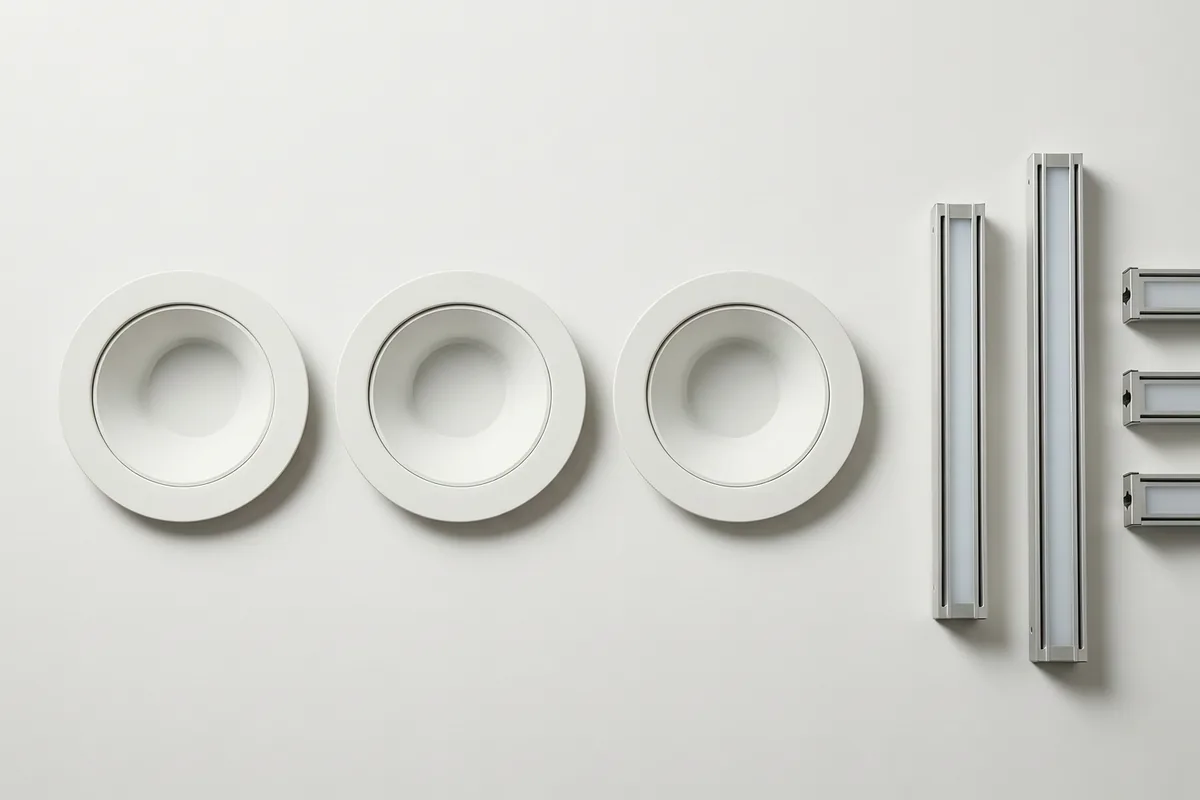
Choose OEM when brand owners need highly customized architectural fixtures — for example a specific trimless recessed COB downlight — where unique aesthetics and exact photometric performance are critical. OEM is the path when differentiation, exclusive optics, and full design control matter more than speed to first shipment.
Choose ODM when distributors or contractors need reliable, proven commercial fixtures to meet tight project deadlines. A catalog linear bar office suspended light or a standard track head can cover office and retail schedules without waiting for new tooling. Pair ODM with clear branding and packaging rules if you need private label led lighting without redesigning the product.
For specialized outdoor or municipal work, review the solar street light manufacturer guide to decide whether catalog ODM products already meet photometric and environmental needs. When the scope mixes custom and catalog SKUs, a commercial lighting solution provider can help map which lines belong on OEM versus ODM.
What does the OEM/ODM project workflow look like?
A disciplined lighting oem odm workflow protects both quality and schedule. Start with a technical brief and drawings: you submit requirements; the factory returns CAD or 3D drawings for review. Next comes prototyping and functional samples so mechanical fit, thermal behavior, and light quality can be checked before any production commitment.
The golden sample is the signed, dated baseline that defines cosmetic, mechanical, and photometric acceptance for the full run. After golden-sample sign-off, run a pre-production pilot to prove assembly-line readiness, then move into mass production. Inspection must run at every stage — incoming quality control (IQC), in-process quality control (IPQC), and outgoing quality control (OQC) — so defects are caught before shipment, not after installation.
How do you protect IP and tooling ownership?
Protecting IP is non-negotiable in oem vs odm lighting deals, especially when you share CAD, optic layouts, or firmware. Sign Non-Disclosure, Non-Use, and Non-Circumvention (NNN) agreements under Chinese law before you send design files. State mold and tooling ownership explicitly in the manufacturing contract so custom dies remain yours when you fund them.
Add IP clauses that assign custom PCB designs, optic layouts, and firmware to the buyer. Retain audit rights to inspect the factory and verify that your molds are stored and used separately from other customers' tooling. Without these clauses, an otherwise strong oem led lighting manufacturer relationship can still expose your design to reuse.
Which certifications and test reports must you request?
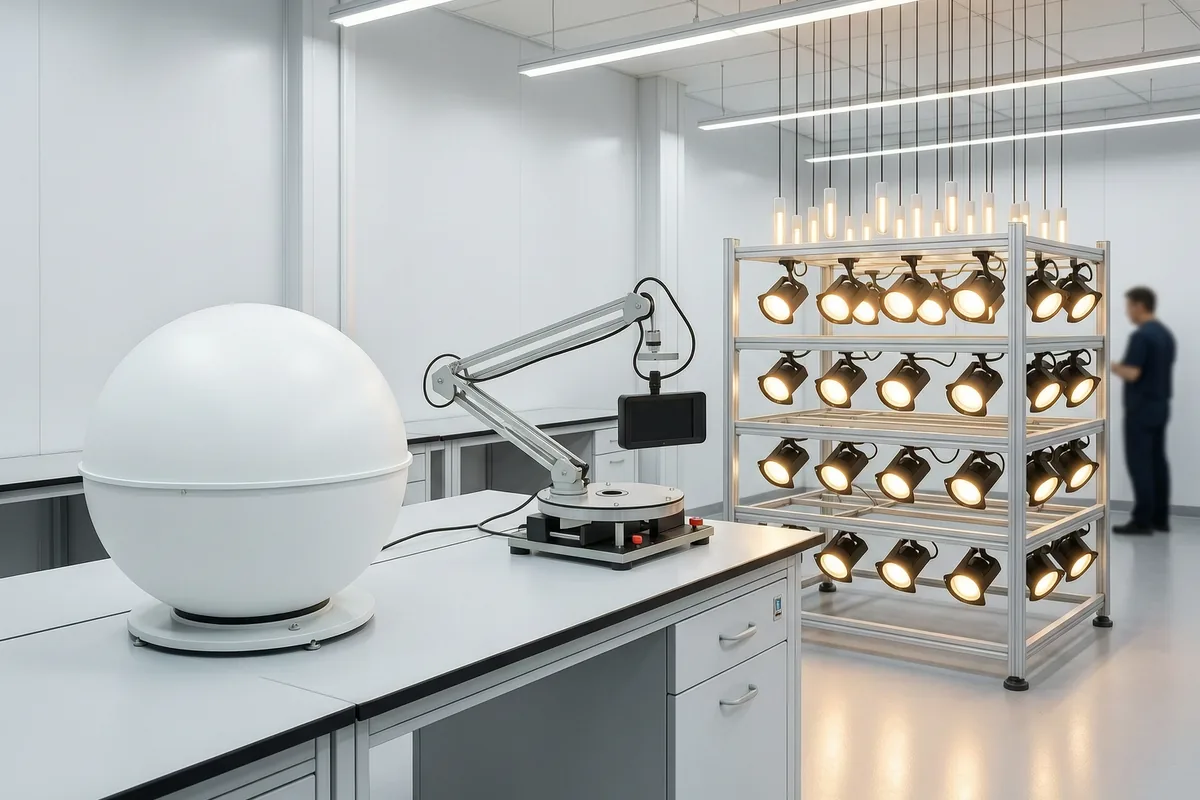
Ask for documents that match the exact SKU you are ordering, not generic catalog certificates. For luminaire safety, request IEC 60598 for global markets and UL 1598 for North America. For LED control gear, request IEC 61347. For optical radiation limits, request IEC 62471 photobiological safety evidence.
For lumen maintenance, request IES LM-80 source data and TM-21 projections so lifetime claims are traceable. For market access, confirm CE and RoHS for Europe plus any local energy or rebate programs that apply. Photometric quality still matters alongside safety — review what is CRI in lighting when you evaluate color performance reports next to the certificates above.
What questions should you ask an LED lighting manufacturer?
Vet partners with written questions before you share final drawings or place a deposit. Ask whether they offer full OEM/ODM lighting services, and whether you can visit for factory-direct sourcing. Ask how they run IQC, IPQC, and OQC, and what their golden-sample approval process looks like in practice.
Ask for product-specific experience — for example with a commercial COB track spotlight 30W — and for references on similar commercial SKUs. Cross-check answers against how to source LED lights from China and the broader LED lighting sourcing guide. Review Formore lighting experience for how factory-first processes are presented, then confirm every commercial term in the purchase contract.
What are the most common OEM/ODM lighting mistakes?
- Sharing CAD files before an NNN agreement is signed.
- Assuming mold ownership without a written tooling clause.
- Skipping golden-sample approval to rush mass production.
- Ignoring IPQC checks once the line is running.
- Accepting test reports that do not match the exact ordered SKU.
- Leaving cosmetic defect acceptance criteria undefined.
These mistakes show up across oem vs odm lighting programs for downlights, linear systems, and track heads. For product-specific pitfalls, also read the LED linear light guide and the magnetic track lighting guide before you lock a first production order.
How do you move from sourcing to mass production?
Finalize the technical brief, sign NNN and tooling contracts, approve the golden sample, and establish a clear inspection protocol before you scale. Use browse all products to see which catalog platforms can support ODM or private label, and contact Formore when you are ready to open an OEM or ODM project discussion. Keep every change controlled against the golden sample so mass production stays aligned with the approved design.