LED linear lights combine aluminum extrusions, LED boards, and diffusers into versatile continuous lighting systems. Choosing the right supplier requires verifying driver quality, photometric data, lumen maintenance, and clear OEM/ODM terms. Compare technical specifications and safety certifications, not just marketing claims, before committing to a commercial purchase order.
What Is an LED Linear Light and How Is It Built?
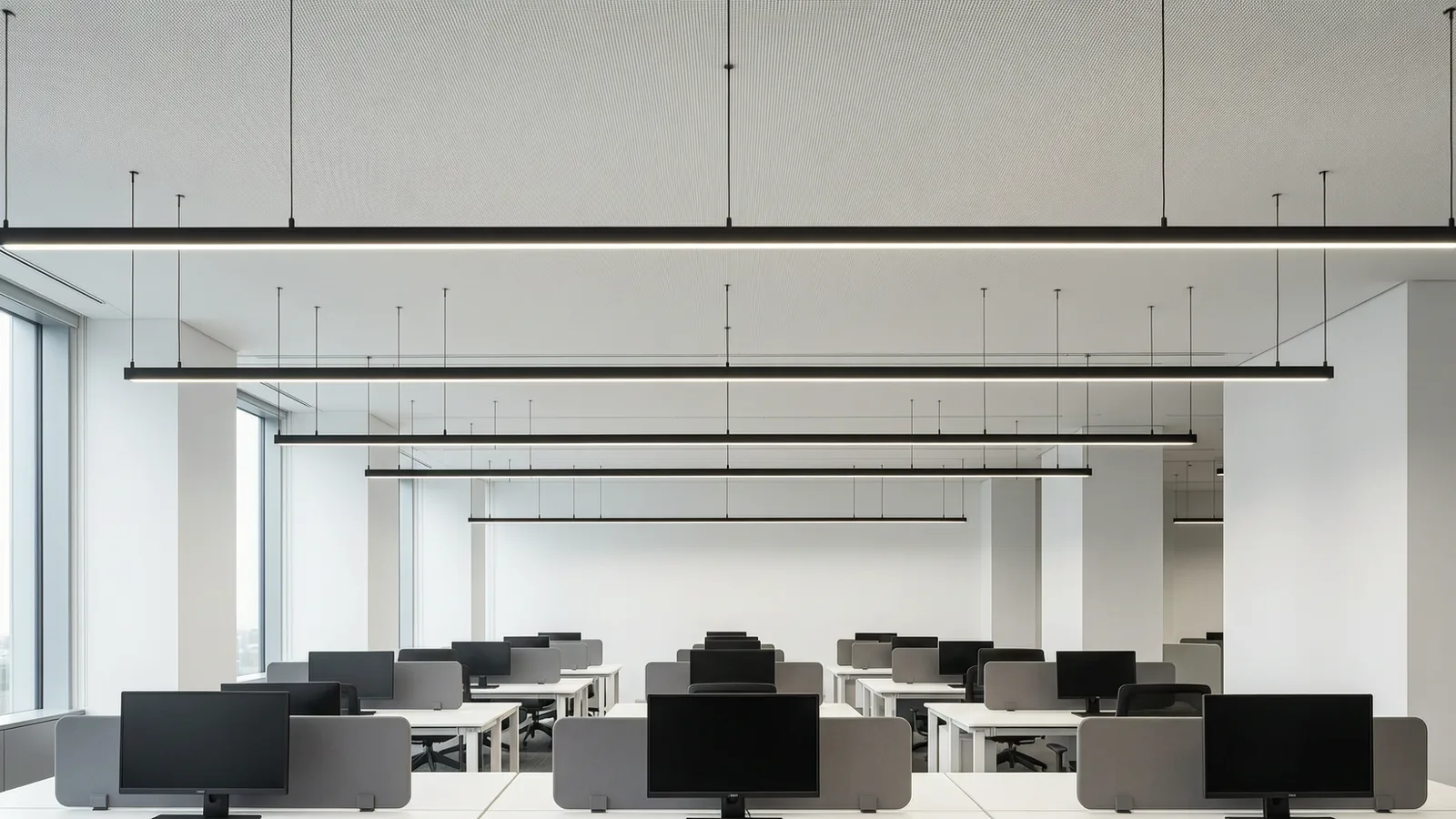
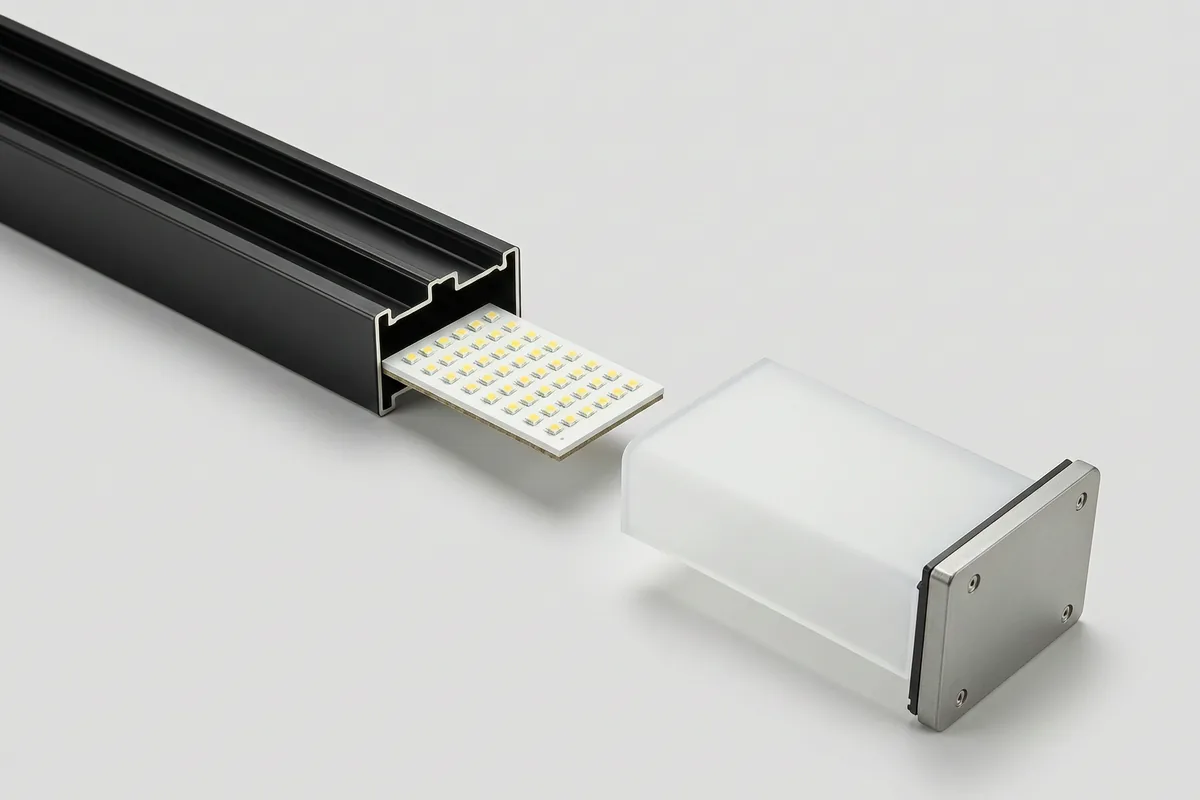
An LED linear light is an architectural fixture designed for continuous, seamless illumination. It consists of four core components. First, the aluminum housing or extrusion acts as both the structural frame and the heat sink. Second, the LED board, populated with SMD or COB chips, generates the light. Third, the diffuser or optic, typically made from PMMA or PC in opal or micro-prismatic finishes, shapes the beam and reduces glare. Finally, a constant-current driver regulates power to ensure stable operation. For highly flexible layouts, also review the magnetic track lighting guide and consider the magnetic linear track system as an alternative modular linear system.
How Do Mounting Types Compare for Linear LED Lighting?
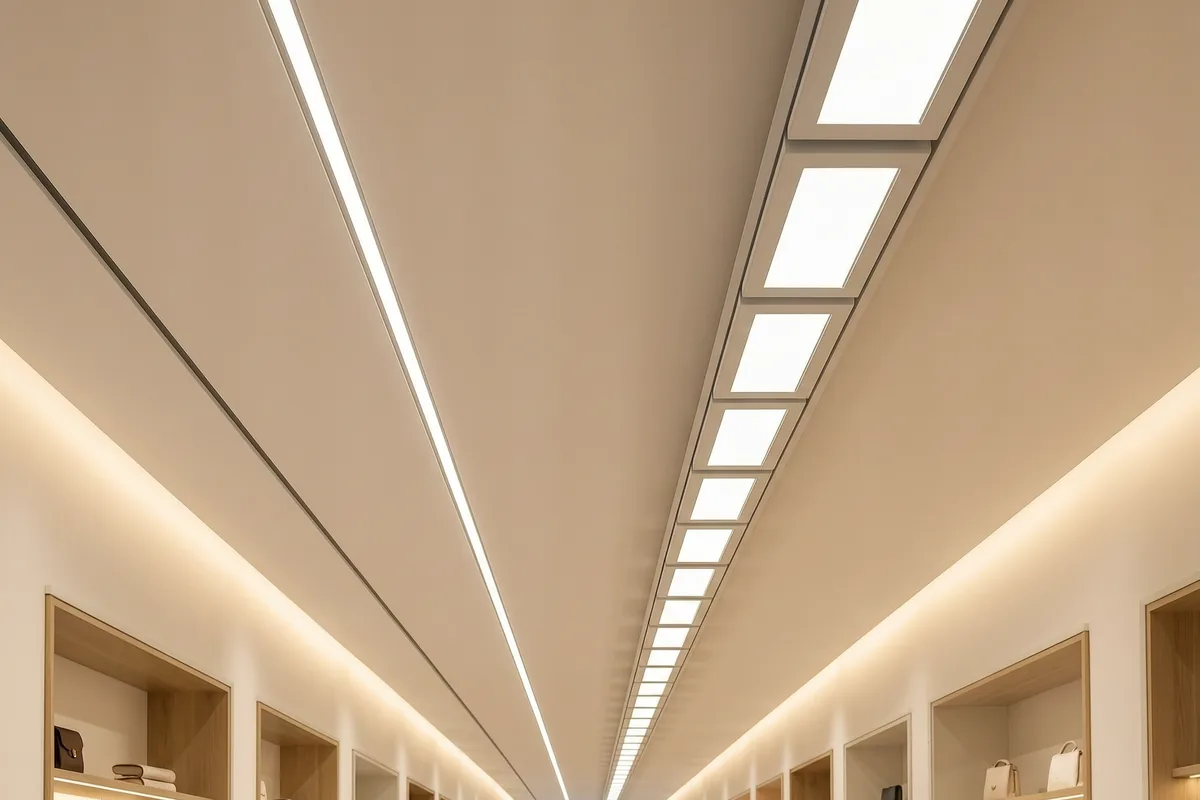
Selecting the right mounting style dictates the visual impact and installation method. A suspended linear office light hangs from ceilings, while a recessed linear slot light sits flush for a seamless look. For utilitarian needs, a linkable LED batten offers simple daisy-chaining, whereas a linear high bay handles heavy-duty industrial heights. Architectural projects often utilize a linear wall washer to highlight textures.
| Mounting Type | Description & Application |
|---|---|
| Suspended | Hangs from ceilings via cables or stems; ideal for open-plan offices and general ambient lighting. |
| Surface-Mounted | Fixed directly to the ceiling or wall; used where recessing is impossible or for industrial aesthetics. |
| Recessed | Flush-mounted into the ceiling or wall; creates a seamless, architectural look. |
| Wall / Slot | Designed for wall washing or architectural slot lighting to highlight textures and facades. |
| Linkable Batten | Utilitarian, daisy-chained fixtures for continuous runs in corridors, warehouses, and retail. |
| High Bay | Heavy-duty, high-output linear fixtures for high ceilings in warehouses and industrial spaces. |
Where Do Linear Lights Fit Best in Commercial Projects?
In modern offices, a suspended linear office light provides uniform ambient illumination. Specifiers must carefully manage glare, which is why understanding UGR in office lighting is critical for screen-based tasks.
Retail environments rely on precise visual merchandising. A recessed linear slot light integrates cleanly into ceilings, drawing attention to displays without distracting from the merchandise.
Warehouses and industrial facilities demand robust, high-output illumination. A linear high bay delivers intense light from great heights, while a linkable LED batten provides cost-effective, continuous runs in lower-ceiling logistics areas.
Educational facilities and long corridors need durable, low-maintenance linear LED lighting. Specify robust housings, accessible drivers, and consistent color across long runs so high-traffic zones stay uniform without frequent relamping or service calls.
For architectural and facade applications, a linear wall washer accentuates building exteriors and interior feature walls. Explore comprehensive commercial lighting solutions to match the right fixture to your specific project environment.
Which Specifications Should You Verify Before Ordering?
Ask for documentation on each point — a verbal confirmation is not a specification.
- Lumen output and efficacy: Verify system lumens and lm/W; request IES files to confirm real-world performance.
- CCT: Select the appropriate correlated color temperature for your space using our color temperature guide.
- CRI and R9: High color rendering ensures accurate color representation. Learn more about what is CRI in lighting and why R9 matters for reds.
- UGR: Minimize glare for visual comfort by reviewing UGR in office lighting and adhering to CIE/IES glare guidance.
- Beam angle and diffuser: Match the light distribution to your ceiling height and task requirements using our beam angle guide.
- Dimming: Choose between digital and analog control. Compare DALI-2 vs 0-10V dimming to match your building management system.
- Flicker: Ensure driver compatibility with IEEE 1789 standards to mitigate visual discomfort and health risks.
- IP rating: Verify ingress protection against dust and moisture according to IEC 60529 for damp or outdoor locations.
- Driver safety: Confirm compliance with IEC 61347 to ensure electrical safety and longevity.
- Luminaire safety: Verify adherence to IEC 60598 for international markets and UL 1598 for North American installations.
- Photobiological safety: Ensure the fixture meets IEC 62471 limits for optical radiation.
- Lumen maintenance: Request IES LM-80 and TM-21 data to project long-term lumen depreciation accurately.
- Rebates: For North American projects, check DLC qualification to secure utility incentives.
What Should You Check for Linkable and Continuous Runs?
Linkable and continuous linear systems succeed or fail on four checks. First, confirm mechanical and electrical reliability of the connectors — rigid joiners keep alignment; flexible jumpers tolerate ceiling irregularities. Second, confirm the maximum continuous length per driver with your supplier so voltage drop does not dim the end of the run. Third, inspect light continuity at joints for dark spots or visible seams between fixtures. Fourth, verify emergency options: whether the run can integrate with a central battery system or needs individual emergency drivers. Do not leave any of these points to a verbal assurance — ask for them on the datasheet.
What OEM/ODM Questions Should You Ask an LED Linear Light Manufacturer?
Start with the OEM/ODM lighting overview, then ask process questions in writing. Cover custom lengths and profile dimensions, custom finishes (anodized or powder-coated), optic and diffuser customization, branding and laser engraving, and packaging requirements. Request sample lead time and mass production lead time for your configuration. Ask for MOQ per SKU in writing — do not assume a default. Confirm inspection options and the outgoing quality control (OQC) procedure, plus the warranty terms that apply to drivers and LEDs. Clarify whether you are buying factory-direct or through a trader before you lock commercial terms.
What Are the Most Common LED Linear Light Buying Mistakes?
- Ignoring voltage drop calculations on long linkable runs, resulting in dim fixtures at the end of the line.
- Specifying high CRI values without verifying the R9 (red) rendering index, leading to unnatural skin tones and food colors.
- Selecting beam angles based purely on fixture appearance rather than calculating the actual throw required for the mounting height.
- Skipping dimming-protocol compatibility checks, causing flickering or failure to dim when integrated with existing controls.
- Failing to verify the IP rating for damp locations, leading to premature fixture failure in humid environments.
- Overlooking lumen maintenance data like TM-21 when comparing upfront costs, resulting in higher long-term replacement expenses.
How Do You Move from Spec Sheet to Purchase Order?
Before committing to a full order, request physical samples of the extrusion, diffuser, and driver to assess build quality. Verify that the driver test reports and photometric files match the exact SKUs you are ordering, not just generic catalog data. Confirm dimming and emergency compatibility with your electrical contractor. Get the warranty terms and production lead time confirmed in writing. Start with a trial order to validate the installation process before scaling up. Utilize comprehensive commercial lighting solutions to ensure every detail is addressed before finalizing your purchase order.